
Every year, thousands of Indian travelers find themselves stuck on the same question — Manali vs Kashmir, which one do I actually go to? Both destinations sit in the northern Himalayas, both promise snow-covered landscapes and mountain scenery that looks straight out of a postcard, and both have been drawing travelers for decades without ever really going out of fashion. But beyond the surface similarities, Manali and Kashmir are genuinely different experiences — different in atmosphere, different in cost, different in what kind of traveler they suit best, and different in what they actually deliver on the ground. This guide cuts through the comparison honestly so you can make a decision that fits your travel style, travel budget, and the kind of memories you want to come back with.
The Basic Difference Nobody Mentions Upfront
Most Manali vs Kashmir comparisons get straight into weather charts and activity lists without addressing the most fundamental difference between the two — one is a town and one is a valley.
Manali is a hill town. It has a center, a mall road, a river running through it, and a compact geography that makes it easy to orient yourself within a day of arriving. When people talk about going to Manali, they are mostly talking about the town itself, plus a handful of day trips to Solang Valley, Rohtang Pass, Hadimba Temple, and Old Manali. The experience is contained, manageable, and easy to navigate independently.
Kashmir is a valley — a large, geographically varied region that contains multiple distinct destinations within it. Srinagar, Gulmarg, Pahalgam, Sonmarg, and Doodhpathri are all Kashmir, but they sit hours apart from each other and offer entirely different experiences. Going to Kashmir means choosing which parts of the valley you have time for, and each choice shapes the trip significantly. This is why Kashmir almost always requires more planning, more travel days, and more logistical coordination than Manali.
Neither approach is better. But understanding this difference upfront helps set realistic expectations for what each destination actually involves.
Atmosphere and Overall Vibe
Manali has a well-worn tourist infrastructure built over decades of popularity. It is comfortable, familiar, and relatively easy to navigate even without local knowledge. The town has a vibrant café culture in Old Manali, a busy market scene along Mall Road, and a social atmosphere that suits groups, young couples, and solo travelers equally. In peak seasons it can feel busy to the point of overcrowding, but it never feels unfamiliar or hard to settle into.
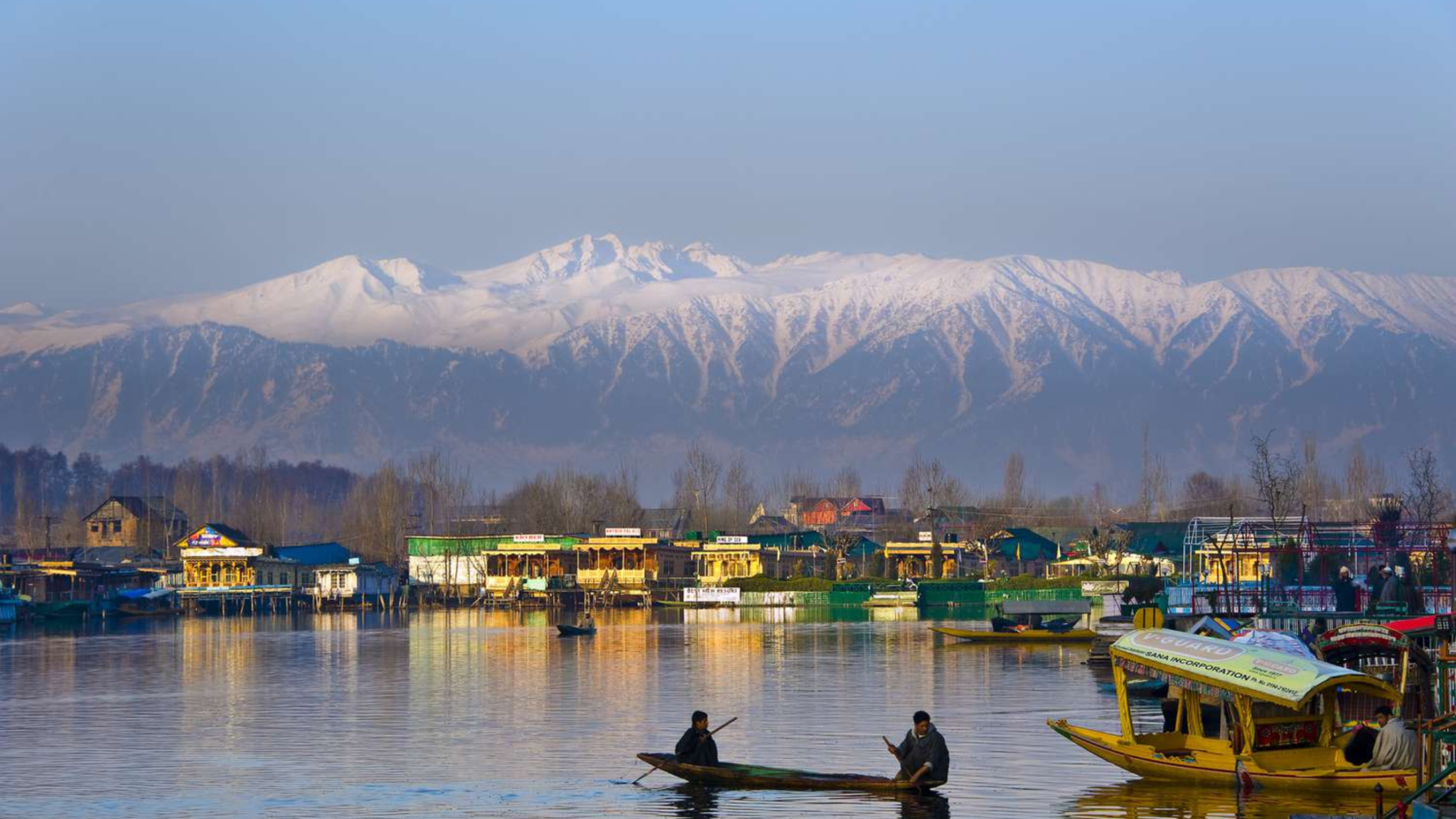
Kashmir carries a different kind of weight. The Dal Lake houseboats, the Mughal gardens, the shikara rides at sunset — these experiences have a grandeur and a cultural depth that Manali’s hill town atmosphere simply does not match. Srinagar in particular feels like a city with genuine centuries behind it, where the old city lanes and the lake’s floating markets tell a story that goes far beyond tourism. Kashmir asks a little more of its visitors in terms of awareness and sensitivity, but it gives back something richer in return.
For first-time mountain travelers, Manali is often the more comfortable starting point. For travelers who have already done a Manali trip and want something that feels more expansive and culturally layered, Kashmir tends to be the natural next step.
Weather Comparison — When Each Destination Shines
Understanding when to go is arguably more important than deciding between the two destinations themselves, because both Manali and Kashmir change dramatically by season.
Manali Weather by Season
Summer (April to June): The most popular time for Manali, with pleasant daytime temperatures between 10°C and 25°C. Rohtang Pass opens, Solang Valley is green and accessible, and the town buzzes with tourists. Accommodation prices peak during May and June.
Monsoon (July to September): Rainfall increases significantly, landslide risk rises on mountain roads, and outdoor activities become limited. Not recommended as the primary travel season.
Autumn (October to November): One of the most underrated windows for Manali — crowds thin out, temperatures are cool but manageable, apple orchards are in harvest season, and the mountains have post-monsoon clarity. Excellent value.
Winter (December to February): Manali’s snow season. Solang Valley gets ski-able snow cover, temperatures drop well below freezing at night, and Rohtang closes. Ideal for snow experiences and a quieter version of the destination.
Kashmir Weather by Season
Spring (March to May): Kashmir’s famous tulip gardens bloom in April, temperatures are mild, and the valley looks its most vibrant. One of the best windows to visit, particularly for couples and photographers.
Summer (June to August): Peak tourist season in Kashmir, when the valley serves as a retreat from the plains heat. Dal Lake houseboats are fully operational, Gulmarg’s meadows are green, and Pahalgam’s rivers run full.
Autumn (September to November): Arguably Kashmir’s most beautiful season — the chinar trees turn gold and red, temperatures drop pleasantly, and the crowds thin out compared to peak summer. One of the most photogenic periods in the valley.
Winter (December to February): Gulmarg transforms into one of Asia’s premier skiing destinations, but travel to Sonmarg and higher altitude areas becomes difficult. Dal Lake occasionally freezes in January, creating an extraordinary visual but requiring preparation for extreme cold.
The key practical takeaway is that Manali and Kashmir share some seasonal overlap but diverge significantly in their peak windows — Kashmir’s spring tulip season and autumn chinar display have no Manali equivalent, while Manali’s winter snow access at Solang Valley is more reliable and activity-rich than Kashmir’s comparable winter experience outside of Gulmarg.
Activities and Experiences- What Each Actually Offers
Manali Activities
- Skiing, snowboarding, and snow sports at Solang Valley in winter
- Paragliding at Solang and Dobhi
- White-water rafting on the Beas River between Pirdi and Jhiri
- Rohtang Pass excursion and high-altitude photography
- Hampta Pass trek for experienced trekkers
- Kullu Valley cycling and road trips
- Temple visits at Hadimba and Manu
- Camping along the Beas River
Kashmir Activities
- Shikara rides on Dal Lake at sunrise and sunset
- Skiing and gondola rides at Gulmarg
- Trekking through Pahalgam’s Lidder Valley and Aru meadows
- Visiting Mughal gardens — Shalimar Bagh, Nishat Bagh, Chashme Shahi
- Betaab Valley and Chandanwari day trips from Pahalgam
- Sonmarg day trip toward Thajiwas Glacier
- Houseboat stay experience on Dal Lake
- Srinagar old city walk and floating vegetable market
The honest assessment here is that Kashmir simply offers more variety and more signature experiences than Manali. A shikara ride on Dal Lake, a ski run at Gulmarg, and a meadow walk in Pahalgam are three completely different Kashmiri experiences that have no real Manali equivalent in terms of diversity. Manali’s activity menu is strong but more concentrated around adventure sports and mountain excursions rather than cultural and landscape variety.
That said, Manali delivers its core adventure experiences with a reliability and ease of access that Kashmir’s more spread-out geography cannot match for a short trip. If you have three days and want to pack in maximum activity, Manali is easier. If you have seven days and want genuine variety, Kashmir wins.
You can explore detailed itinerary options for both destinations on our Jammu and Kashmir tour packages page and compare what a well-planned Kashmir trip actually looks like against a Manali itinerary.
Cost Comparison- Which is More Budget Friendly
Manali has a wider range of budget accommodation options and a more competitive local transport network than Kashmir, making it generally more accessible for tight-budget travelers. Food, local cabs, and activities are priced more competitively, and the shorter travel distance from Delhi means lower transport costs.
Kashmir runs at a slightly higher price point across most categories. Houseboat stays, while not uniformly expensive, sit above the budget guesthouse price range. Transport within Kashmir between Srinagar, Gulmarg, Pahalgam, and Sonmarg adds up quickly given the distances involved. Food in Srinagar is excellent and fairly priced, but overall trip costs for Kashmir tend to run 20 to 40 percent higher than a comparable Manali trip for the same number of nights.
That said, Kashmir’s higher cost buys genuinely more diverse experiences, and many travelers who have done both consider the additional spend well justified for what the valley delivers.
Which Traveler Suits Which Destination
Choose Manali if you:
- Are visiting the Himalayas for the first time
- Want a compact, easy-to-navigate destination
- Are on a tighter budget
- Prioritize adventure sports over cultural experiences
- Have 3 to 5 days available
- Want reliable snow activity access in winter
Choose Kashmir if you:
- Want a broader, more culturally layered experience
- Have 6 to 8 days or more available
- Are celebrating a honeymoon or special occasion
- Want to combine multiple distinct landscapes in one trip
- Are comfortable with a slightly higher trip budget
- Have already visited Manali and want something new
Can You Do Both in One Trip
The short answer is yes, but it requires planning and enough travel days to do justice to both. A combined Manali and Kashmir trip typically runs 10 to 12 days minimum to cover both destinations meaningfully without spending most of the trip on buses and flights.
The most practical combined route goes Delhi — Manali by road — Manali to Srinagar by flight or road — Kashmir exploration — return to Delhi from Srinagar. Trying to squeeze both into less than 8 days results in surface-level visits to each that rarely feel satisfying.
If you are considering a combined trip or want a customized itinerary built around both destinations, our travel services cover multi-destination Himalayan packages with transparent pricing and verified accommodations throughout.
Our Honest Recommendation
If this is your first Himalayan trip and you have 4 to 5 days — go to Manali. It is easier, cheaper, and delivers a solid mountain experience without the planning complexity that Kashmir requires to do properly.
If you have been to Manali before, have 7 or more days, and want a trip that genuinely stays with you — go to Kashmir. The valley has a way of exceeding expectations in a manner that few Indian destinations manage consistently.
And if you cannot decide, talk to us. At Travelwingz, we have planned both destinations extensively and can tell you within five minutes of understanding your travel dates, group size, and priorities exactly which one makes more sense for your specific situation — or how to combine both without overstretching the itinerary.
Frequently Asked Questions
Q1. Which is better for a honeymoon- Manali or Kashmir?
Both are popular honeymoon destinations but for different reasons. Manali offers snow, adventure, and cozy mountain stays in a compact setting that works well for shorter honeymoons of 4 to 5 nights. Kashmir delivers a more grand and romantic experience — houseboat stays on Dal Lake, shikara rides at sunset, and meadow walks in Pahalgam — that suits longer honeymoons of 6 to 8 nights. If budget allows and time permits, Kashmir edges ahead for honeymoon experiences. Browse our destinations page to compare honeymoon itinerary options across both.
Q2. Can Travelwingz plan a combined Manali and Kashmir trip?
Yes — combined Himalayan itineraries are something we plan regularly. We handle the routing, accommodation, transport, and permits across both destinations in a single coordinated package. Reach out through our contact page with your travel dates and we will build a combined itinerary that gives each destination the time it deserves.
Q3. Is Manali or Kashmir better for solo travelers?
Manali is generally considered more solo-traveler-friendly due to its compact size, strong backpacker infrastructure, and well-established solo travel community, particularly in Old Manali and Kasol nearby. Kashmir is absolutely doable solo but benefits more from having a travel companion or organized transport given the distances between destinations within the valley.
Q4. Which destination has better trekking options — Manali or Kashmir?
Both offer excellent trekking but at different scales. Manali’s treks like Hampta Pass and Beas Kund are well-established and accessible within shorter timeframes. Kashmir’s trekking routes, including the Kashmir Great Lakes Trek and Tarsar Marsar Trek, are considered among the most spectacular high-altitude treks in all of India but require more days and preparation. Serious trekkers often rate Kashmir’s routes higher in terms of overall experience.
Q5. What is the best time to visit Kashmir versus Manali for first-time visitors?
For Manali, April to June and October to November offer the most balanced combination of good weather, accessible roads, and reasonable pricing for first-time visitors. For Kashmir, April to May for the tulip season and September to October for the autumn chinar display are widely considered the two best windows for a first visit. Read more destination guides and seasonal tips on our travel blog to help plan your timing.